Stela Typeface Review: A Modern Display Font Duo for Bold Branding
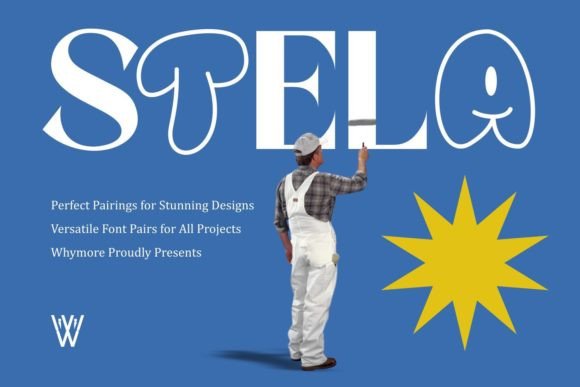
I opened a blank brand board on my screen, staring at the empty canvas of a new boutique skincare identity project. The client wanted something that felt clean but undeniably memorable, a visual hook that would stop a scroll and make a customer pause. After cycling through several generic sans serifs that felt too corporate, I dragged Stela into the workspace. It wasn't just another typeface; it was an immediate shift in mood. Featuring a blend of modern aesthetics and a dash of daring creativity, the Stela Font Duo is an artful combo of Sans Serif and Grafity font styles specially crafted to elevate your design projects. Within minutes, the logo concept transformed from a standard layout into a cohesive brand system.
Stela for Logo Design and Creative Studio Identities
When you start Stela as a primary element for logo design, the versatility of its dual nature becomes immediately apparent. In this specific branding case, I needed a mark that could sit comfortably alongside a minimalist icon without feeling heavy or dated. The Sans Serif component of the duo offered geometric precision, perfect for establishing structure, while the Grafity style injected the necessary personality. Unlike many display fonts that sacrifice readability for flair, Stela maintains a strong backbone even when scaled down for social media avatars or favicons. I tested it on a rough draft for a creative studio, and the contrast between the clean lines and the playful curves created an instant hierarchy that guided the viewer's eye naturally. This balance makes it an ideal choice for businesses that want to appear professional yet approachable, avoiding the stiffness often associated with strict corporate typography.
Stela on Packaging Mockups and Product Labels
Moving from digital screens to physical applications, I placed Stela onto a mockup for a local coffee shop's packaging. The challenge here was making the label pop on a shelf crowded with competitors. The Grafity variant acted as a stunning accent for the product name, drawing attention with its unique character shapes, while the accompanying Sans Serif handled the ingredient lists and descriptions with clarity. This combination proved essential for product labels where both style and legibility are non-negotiable. When used correctly, these Fonts create a premium feel that suggests high-quality contents inside. I noticed how the letterforms interacted beautifully with different textures, whether printed on matte kraft paper or glossy vinyl stickers. The weight distribution allowed for bold headlines that didn't overwhelm the supporting text, creating a sophisticated visual rhythm that elevated the entire package design.
Stela for Website Headers and Social Media Graphics
In the realm of web design and digital marketing, capturing attention within seconds is critical. I applied Stela to the hero section of a landing page for a handmade jewelry shop, replacing the standard headline font with the display options available in the duo. The result was a striking visual impact that immediately communicated the brand's artistic direction. The Fonts performed exceptionally well on various devices, maintaining their sharp edges and distinct character even at smaller sizes on mobile screens. For social media graphics, the Grafity style served as a perfect tool for Instagram stories and promotional posts, adding a touch of elegance that stood out against plain backgrounds. However, I found that using it for long-form content like blog posts would be counterproductive; it is strictly a display font meant for short phrases, headlines, and emphasis rather than body copy.
Stela for Business Cards and Editorial Design Assets
The final test involved placing Stela on a set of business cards and a flyer for a photography portfolio. On the card stock, the font felt substantial and tactile, giving the impression of a well-established business. The interplay between the two styles allowed me to separate the designer's name from their title effectively, creating a clear visual separation without needing extra graphic elements. Similarly, in editorial design assets like magazine covers or event posters, the font's ability to command space was evident. It works best when paired with a neutral serif or a simple sans serif to let the Stela variants shine as the focal point. If you are looking for a typeface that can handle the role of a decorative font while still retaining structural integrity, this duo delivers exactly what is promised in its description.
Understanding the Limitations and Best Pairings
While Stela is a powerful tool, it is not a one-size-fits-all solution. As an experienced designer, I must note that this font is not suitable for formal corporate documents, legal contracts, or any scenario requiring dense blocks of text. Its "daring creativity" is its strength, but also its limitation for serious, understated communication. For those seeking a commercial font that bridges the gap between modern and artistic, Stela excels in niche markets like lifestyle brands, fashion boutiques, and creative agencies. To get the most out of these Fonts, I recommend pairing the Grafity style with a classic serif for a timeless look, or combining the Sans Serif with a handwritten font for a contemporary, eclectic vibe. Always review the included styles, alternates, and ligatures before committing to a final design, as these small details can significantly enhance the overall aesthetic. Remember to check your commercial font licensing carefully before using the typeface in client work, merchandise, or print-on-demand products to ensure full compliance.